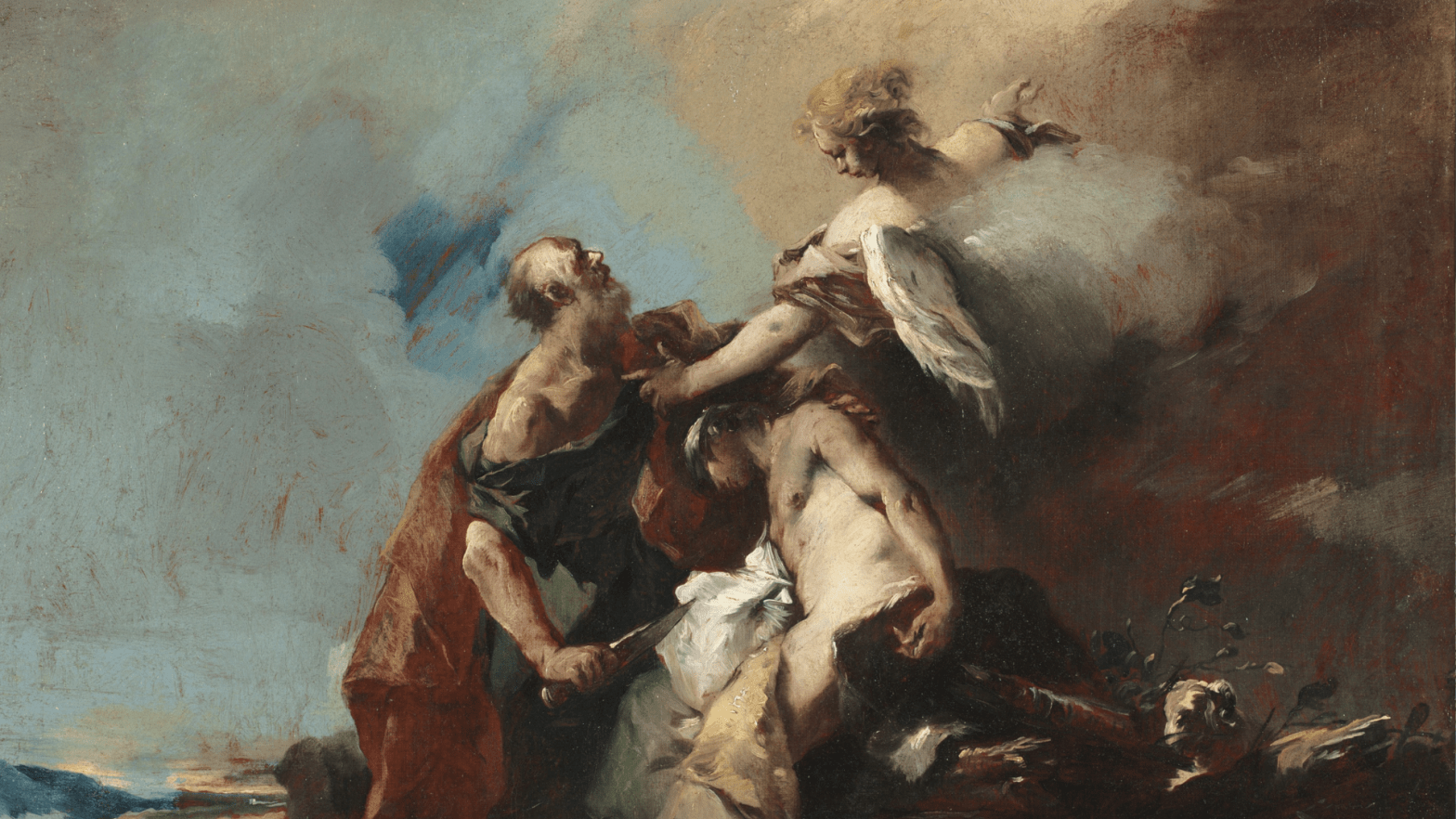
A few years back, a question came to mind. Why didn’t Abraham think that God was crazy to tell him to kill his son? If I woke up in the middle of the night and I was heard a voice saying that I should kill Onew, I would flip out. Are you crazy? I would think that I was going mad and take an indefinite vacation to the Bahamas. But Abraham decides to actually kill his son. Either Abraham was crazy and danger to society or God is sick and twisted. But is that really the full picture?
in Luke 10:26 Jesus asks two question. “And He said to him, “What is written in the Law? How does it read to you?”
The first step is to focus on what it says. Then we allow what it says to inform us regarding what it means. When we focus on what it says, then we will be surprised with what it actually means. In Genesis 22:1 it says that “Some time later God tested Abraham.”
Simply by looking at what it said, we know that God was testing Abraham. In the text, there is no indication that God actually wanted Abraham to kill Isaac. God wasn’t interested in Isaac blood. Let’s make that clear.
Also, we have to realize who Abraham is. He is a man of his time. Abraham was born, raised and was living in a world where child sacrifices were common. How do I know this? In reference to what the other nations were doing, God said in Deuteronomy 18:10 that they were not to, under any circumstances, sacrifice their children to the idols of the land. Furthermore they were not to mimic their methods in their worship towards Him. In Deuteronomy 12:31 God makes Himself clear.
“You must not worship the Lord your God in their way, because in worshiping their gods, they do all kinds of detestable things the Lord hates. They even burn their sons and daughters in the fire as sacrifices to their gods.”
God says, clearly, don’t worship me the way the pagans worship their God’s. God didn’t want them to burn children to him. He wasn’t into that. But Abraham, having grown up in that world, he wouldn’t have thought it was crazy for a deity to demand such a sacrifice.
Throughout history, people often sacrificed humans for the greater good.
To appease the gods.
To pray for good weather
To bless their agricultural efforts for the year
To help them win a battle or for protection from their enemies
Dedicating a building. (Japan)
In Aztec history, we lear that Over 80,000 prisoners killed for the re-consecration of their great pyramids in 1487. over a period of 4 days.
Human sacrifices was considered the greatest show of dedication, sincerity and faith.
But, things got more serious when it came to child sacrifices. Child sacrifice is thought to be an extreme extension of the idea that, the more important the object of sacrifice, the more devout the person giving it up is.
When we actually see what the Bible says, and how it compares to world at the time, we can quickly see that it wasn’t God who was sick, but the world at large. God was simply speaking in the language of the time. This made sense to Abraham.
Until this point in Abraham’s experience, he, like many others would have believed that his relationship with God was based on what he brought to the table. He believed that his salvation was based on how sincere he showed himself to be. This is why, when God promised a son, he tried to make it happen his way. He was under the impression that by offering up Isaac, his most prized possession, he would prove to God that he was completely and totally devoted to Him.
First, let me be clear that Abraham’s obedience itself is one we can respect and honor. But, apart from that, to put it simply. Abraham’s understanding of the gospel was warped. He had a pagan understanding of the human and divine relationship. He believed that the basis of the divine human relationship was based on what he did.
But, just for a second, let’s assume that this was true, if what we bring determines the relationship, when is it enough? We can never know. The reason that religions and culture resorted to human sacrifices, was because there was no clear way to know what they were to do. Not knowing, they went straight to what they thought was most precious. As christians with access to the Bible, we cannot live as if we have no idea what God wants from us…
Many of us, if given a choice between killing our children to be right with God, or going into the lake of fire, we would choose the latter. But in the words of Abraham, there’s a glimmer of hope.
“God himself will provide the lamb for the burnt offering, my son.” (Genesis 22:8)
Even though he was told that he was to kill his son, even though that was his plan, Abraham, the aged father, hoped against hope, that this God that he had come to know would be different than the other pagan gods. He prayed over and over again, that this God, who had been so faithful to him time and time again, would be different than the terribly capricious gods like Molech, who demanded that children be burned alive to earn his pleasure. Even though God had told him that he was to kill Isaac, he hoped against hope that God would provide a different way.
And God came through.
After three days of silence, God called Abraham’s name again and told him not to kill his son. Furthermore, verses 13-14 says that
Abraham looked up and there in a thicket he saw a ram caught by its horns. He went over and took the ram and sacrificed it as a burnt offering instead of his son. So Abraham called that place The Lord Will Provide. And to this day it is said, “On the mountain of the Lord it will be provided.”
This experience was to show Abraham, a man of his time, that this God, was fundamentally different than any of the other gods. Abraham’s relationship with God was built solely on what God brings to the table. God doesn’t require Abraham’s son. God gave His son. God doesn’t require human blood. God spilt divine blood.
Our salvation isn’t built on the greatness of our sacrifice, but on the sacrifice that God made for us. The core of Christianity, rightly understood, is not built on my sacrifice, but what God was willing to risk for us.
Christ was treated as we deserve, that we might be treated as He deserves. He was condemned for our sins, in which He had no share, that we might be justified by His righteousness, in which we had no share. He suffered the death which was ours, that we might receive the life which was His. “With His stripes we are healed.” Desire of ages 25.
He risked it all, so that you and I can be saved, eternally saved. When we think of your relationship with Jesus, and ideas of blind demands for sacrifice come to mind, we’re barking up the wrong tree. God that the Bible speaks about is all about what He gave to us. Anything other than this, is not God.
You, the reader might live your life with a question that sounds similarly to Micah 6:6-7.
“With what shall I come before the Lord and bow down before the exalted God. Shall I come before him with burnt offerings, with calves a year old? Will the Lord be pleased with thousands of rams, with ten thousand rivers of olive oil? Shall I offer my firstborn for my transgression, the fruit of my body for the sin of my soul?
How many of us, live our lives, not knowing what the right thing to do is? How many of us, go from year to year, with so much uncertainty regarding how to be saved.
How many of us wonder if we will ever be good enough for God?
I have good news for you.
“The pagan system of sacrifice was wholly unacceptable to God. No father was to offer up his son or his daughter for a sin offering. The Son of God alone can bear the guilt of the world.” Desire of Ages 469.
Our relationship with God is completely and totally based on what He’s done for us.
 amodernheretic.com